← Back to Bite-Size Climate Tech
Bite-Size Climate Tech · Season 5 · E5
Can Cement Be Made With 85% Less CO₂ at the Same Cost? | CURA
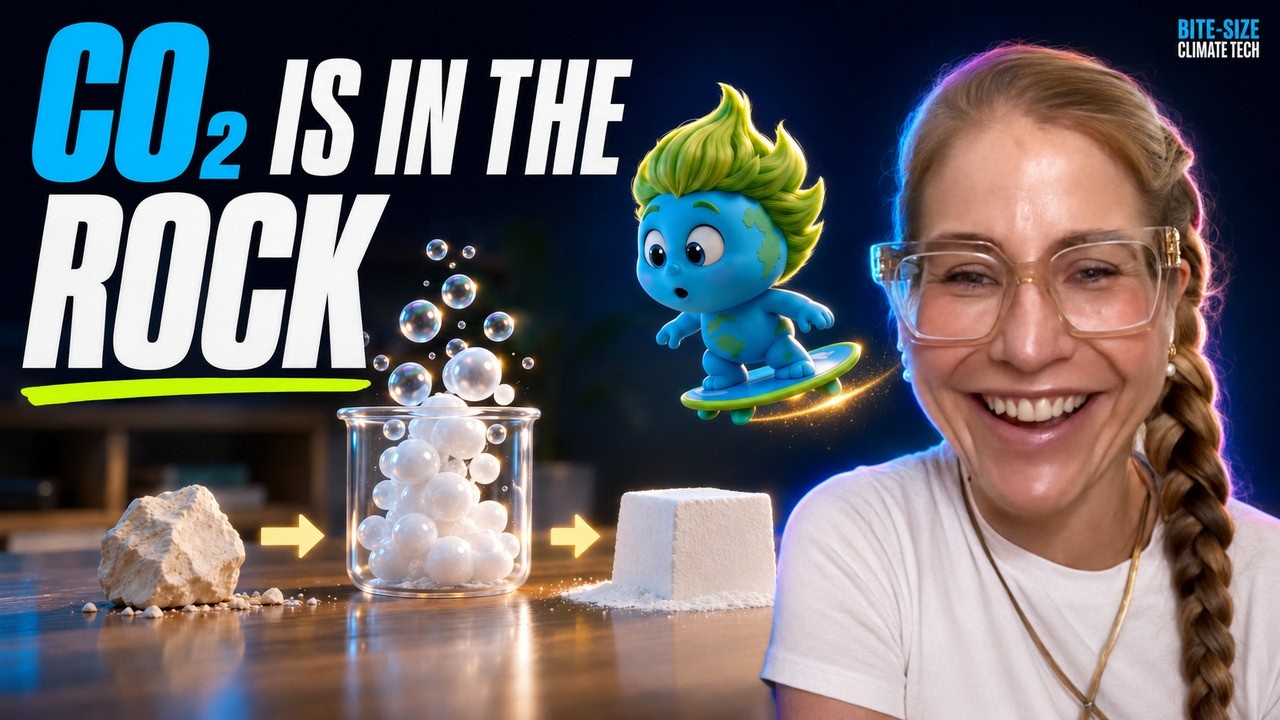
About this episode
Cement’s climate problem starts inside the rock itself.
Dr. Erin R. Bobicki, co-founder and CEO of CURA, joins Lydia Chen to explain how the company is using electrochemical pre-calcination carbon capture to separate CO₂ from limestone before it enters the cement kiln.
Using the familiar reaction between vinegar and chalk, Erin explains why cleaner fuel alone cannot solve cement’s emissions, how CURA’s process works, and why carbon pricing is changing the commercial case for cement producers.
The conversation also explores CURA’s path from lab to paid pilot, the experience in northern Labrador that deepened Erin’s commitment to climate, and her belief that the cheapest option must also become the greenest option.
Key takeaways
- Why much of cement’s CO₂ is chemically locked inside limestone
- How CURA intervenes before the kiln
- The volcano experiment used to explain the process to an eight-year-old
- CURA’s path from mini-pilot toward commercial deployment
- Why carbon pricing is changing cement economics
- Why “the next generation is already on it”
Guest
Dr. Erin R. Bobicki
Co-founder and CEO, CURA
Listen and watch
Support Bite-Size Climate Tech →
Selected visual explanations in this episode were created with AI-assisted animation and are intended as conceptual illustrations, not engineering schematics. Technical claims and process descriptions come from the recorded conversation with CURA.