← Back to Bite-Size Climate Tech
Bite-Size Climate Tech · Season 5 · E6
How Climate Tech Gets Out of the Lab | Prof. Vikram Yadav
About this episode
Most Bite-Size Climate Tech episodes start with one technology. This conversation became something much bigger.
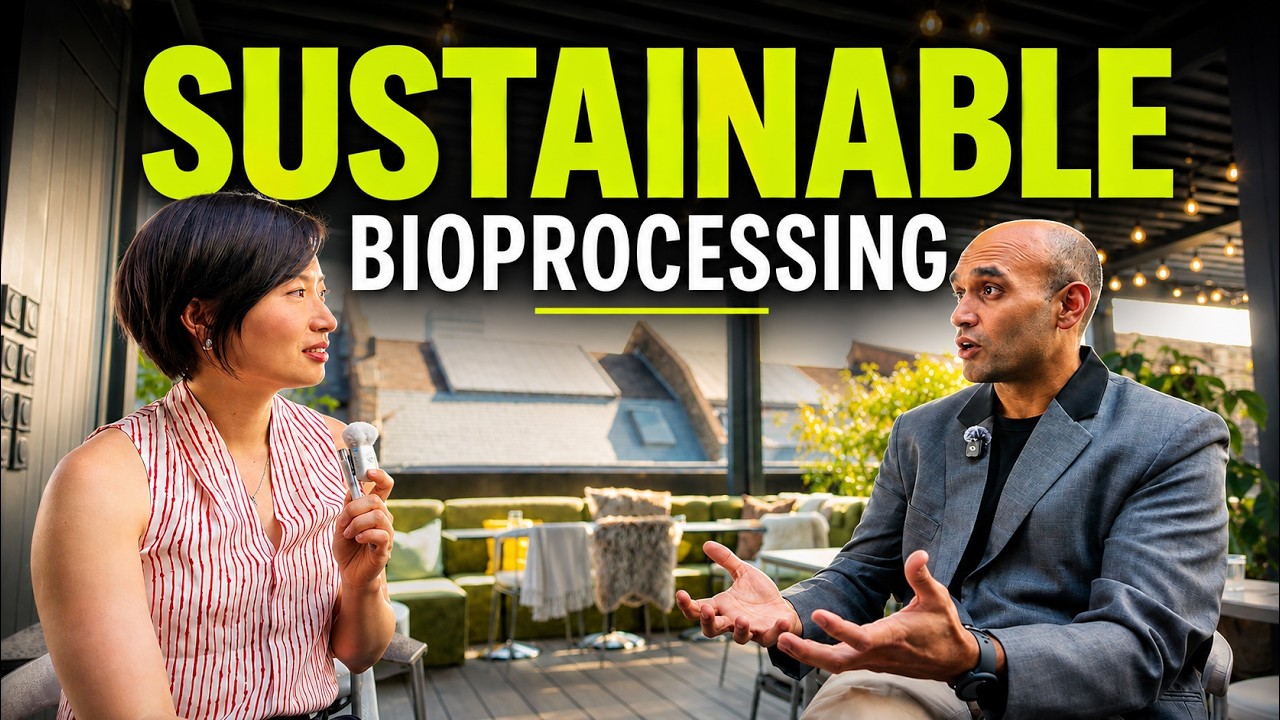
Professor Vikram Yadav joined Lydia in London for a rare in-person BSCT conversation. They begin with intelligent bioprocessing and a deceptively simple question: when does a scientific invention actually become innovation?
From there, the conversation explores why climate technologies need to be designed for scale from the beginning, why commercial reality matters alongside scientific performance, and why scientists should be bold enough to ask how their inventions might fail.
They also talk about bringing more talented people into climate work, Vikram's journey from chemical engineering and oil & gas into biotechnology, the book that helped him see biology as a tool for planetary-scale problems, and why he remains optimistic about the next generation.
One idea became the spine of the conversation: there is a difference between invention and innovation. A breakthrough only becomes innovation when it works in the real world, at scale.
Recorded in London, May 2026.
Key takeaways
- What intelligent bioprocessing means and where synthetic biology fits
- Why material structure can change material performance
- Why climate technology should be designed backwards from scale
- The difference between scientific invention and real-world innovation
- Why scientists should be bold enough to ask how their ideas might fail
- Why climate needs more talented people working on planetary-scale problems
- Vikram's path from chemical engineering and oil & gas into biotechnology and climate
Guest
Professor Vikram Yadav
Professor, University of British Columbia · Co-Founder & Chief Scientific Officer, Tydra Labs
Listen and watch
Support Bite-Size Climate Tech →
Selected visual explanations in this episode use AI-assisted animation and conceptual graphics to make scientific ideas easier to understand. They are explanatory illustrations, not representations of a company's current commercial process. The conversation was recorded in May 2026.